
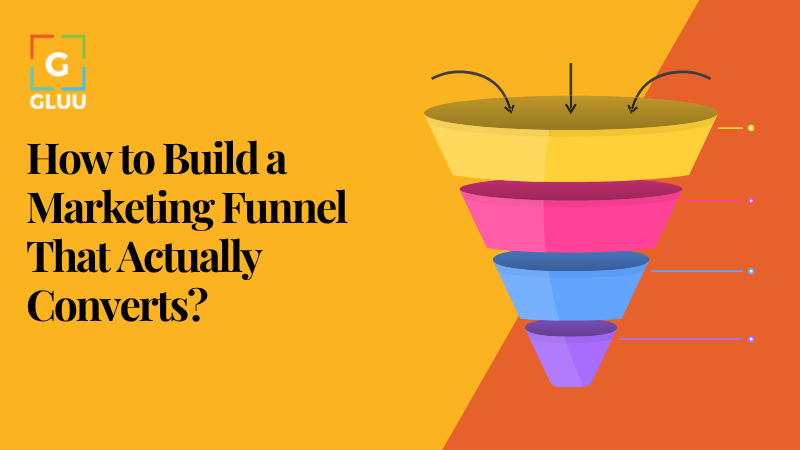
Businesses are always customer-centric, and with technological and digital advancements, simply having a great product or service is not enough. It is important to consistently convert leads into paying customers. It is even more important for small and medium-sized businesses to attend to this aspect with even more attention. That’s where the marketing funnel comes into the picture. It does not just attract attention, it builds interest, trust and drives customers into taking desired action. Read further in the blog to understand more about the marketing funnel, why to use it, steps to build a marketing funnel that converts, and some common mistakes to avoid while dealing with the marketing funnel.
A marketing funnel is a step-by-step process or a framework that represents or outlines how potential customers discover your business, engage with it and eventually take the desired action. A marketing funnel is used by marketing teams to plan and craft strategies and develop content that engages prospective customers and guides them through their customer journey towards a conversion.
The marketing funnel generally includes four key stages, which are explained as follows:
Each stage of the funnel requires different types of strategies to convert leads into customers. The funnel shape is such that it illustrates that the audience gradually becomes smaller at each stage or step of the journey.
If you’re wondering why businesses should consider using marketing funnels, here are some of the most common reasons:
Now that you know what a marketing funnel is and why it is important to use it in a business, let’s understand how to build the marketing funnel that converts using these simple steps:
Start by understanding the stages your potential customers go through, from discovery to decision. Identify their needs, motivations, and potential objections at each point. This becomes the foundation for your funnel.
Create visibility where your audience already spends time, such as search engines, social platforms, and industry spaces. Focus on helpful, engaging content that addresses pain points and piques curiosity.
Once you attract attention, ensure your content is strategically mapped to each funnel stage. Use your customer insights to build targeted messaging and resources that guide users through the journey.
Nurture leads by answering their questions and positioning your business as a helpful expert. Offer free value through checklists, guides, webinars, or case studies.
As leads move closer to a decision, clearly communicate what makes your offering stand out. Your USP should address why you're better, faster, or more reliable than competitors.
Make it easy for prospects to take action. Use clear CTAs, frictionless forms, and persuasive offers. Eliminate confusion and reduce the steps required to become a customer.
Your funnel doesn't end at checkout. Follow up with onboarding, support, and exclusive offers to turn new customers into loyal fans and repeat buyers.
Just creating a marketing funnel is not enough. Even a strong funnel can underperform if these mistakes aren’t avoided:
A well-designed and crafted marketing funnel doesn’t just convert; it helps businesses grow and turn customer interest into revenue. When implemented and exploited correctly, it proves to be a powerful engine for a business’s sustainable growth. It is important to carefully implement steps to build a marketing funnel as a successful one can help businesses ensure their marketing efforts target the right customers, track their progress, and better plan and execute their marketing campaigns. It is advisable to connect with a reliable partner like Gluu that can understand your business, its customers and draft a strategy to successfully implement a marketing funnel that converts.